Change control
Ports, paths, ownership and rollback

Data-centre connectivity
LGN installs and recovers physical data-centre infrastructure where mechanical integrity, traceability and verified performance cannot be left until final handover.
LGN delivery framework
Ports, paths, ownership and rollback
Density, bend control and serviceability
Labels, records and tested connectivity
Purpose and outcome
Data-centre connectivity sits between construction delivery and operational IT. A link can pass through several teams, enclosures and interfaces before it carries service, so quality depends on more than termination. LGN supports high-density fibre, copper links, cabinets, patching, structured routes, testing and remediation as a coordinated physical layer.
The design is considered from the operator’s perspective: can routes be traced, fibres accessed, cabinets changed and results understood without creating unnecessary service risk? This emphasis on maintainability helps technical stakeholders assess the installed system rather than relying on a completion statement.
Scope
The final scope is specific to the site, but commonly includes the following workstreams.
Install and manage fibre trunks, enclosures, splice trays, patching and presentation for dense technical spaces.
Deliver copper connectivity, cabinet infrastructure, labelling and patching alongside the fibre layer.
Plan access, permits, change windows, segregation and progressive sign-off around operational constraints.
Inspect, test, diagnose and remediate systems that have failed certification or practical operation.
Delivery and assurance
Before work begins, LGN reviews route, density, enclosure, hardware, patching, identification, testing and the operational rules of the environment. Installation is checked progressively so mechanical or routing problems are discovered while they remain accessible. Test exceptions are investigated in context rather than repeatedly re-tested without diagnosis.
Commercial scope varies with security, inductions, access windows, escorting, shutdown arrangements, density, documentation quality and whether LGN is installing new infrastructure or recovering an inherited system. The proposal should distinguish installation, test, remediation and active-equipment responsibilities.
LGN project evidence
In a supplied critical recovery case, a new primary data-centre fibre network reached go-live with an initial certification pass rate of approximately 60%. Inspection found systemic restraint, strain, splice and routing problems. LGN corrected anchoring and fibre management, removed and reterminated unreliable fibres, completed fusion splicing and tested progressively.
The recovery ran for approximately three weeks and returned the remedial scope with verified performance and improved serviceability. It demonstrates why data-centre cabling must be treated as operational infrastructure rather than a cosmetic close-out item.
A better project brief
Share the site address, intended outcome, drawings or device schedule, required completion date, access restrictions, operating hours, known standards, existing test evidence and the party responsible for active configuration. LGN will identify assumptions and missing interfaces before they become installation risks.
LGN project photography


Questions clients ask
Yes, where the operating rules, access, permits, change control and scope are agreed. The delivery plan must respect the site’s risk controls.
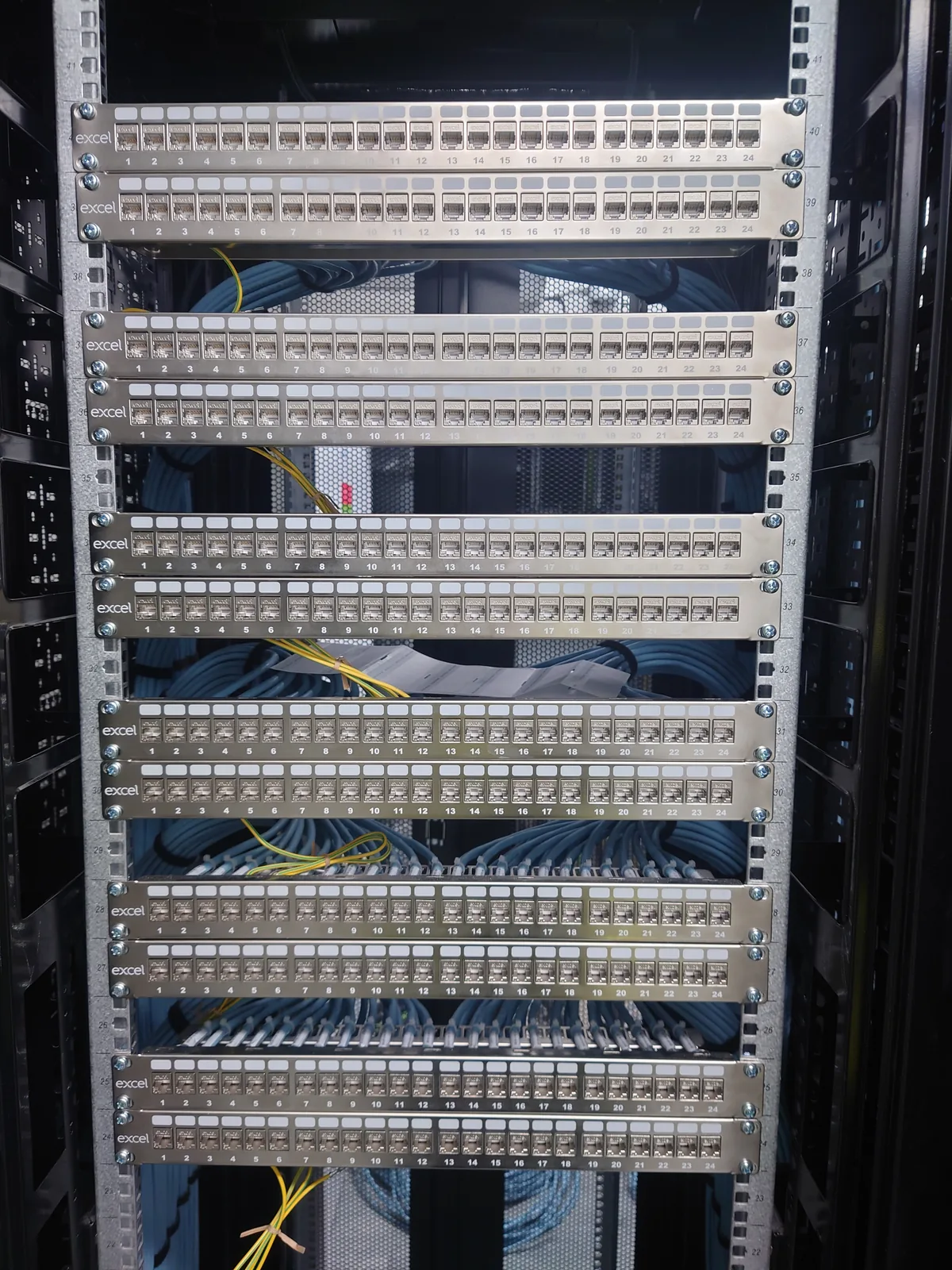
Yes. Supplied evidence includes Excel and Huber+Suhner high-density fibre hardware, splicing, routing, remediation and certification.
Yes. LGN can review test evidence, inspect the physical installation, isolate failure patterns and propose a bounded remedial plan.
The agreed approach may include progressive test results, exception logs, photographs, marked-up information and structured certification packs.
LGN can support hardware placement, racking and patching where agreed. Active configuration ownership must be defined with the client or MSP before delivery.
Common causes include poor restraint, excessive strain, unsuitable bend management, contaminated or damaged interfaces, splice defects, route issues and incomplete test control.