Survey
Routes, cabinets and operational constraints

Copper and Fibre Optic Networks
From a planned office or school upgrade to a high-volume operational facility, LGN coordinates routes, cabinets, copper, fibre, testing and handover as one accountable physical network.
LGN delivery framework
Routes, cabinets and operational constraints
Cat6/Cat6A, containment and labelling
Certification, records and handover
Purpose and outcome
Commercial cabling is easy to underestimate because much of it disappears above ceilings, below floors and inside cabinets. The consequences remain visible for years: unclear labels, inaccessible routes, unexplained test failures and a comms room nobody wants to change. LGN starts with the building, the operational brief and the handover standard, then develops the installation around them.
That gives IT teams, facilities managers, MSPs and fit-out partners a defined route from survey to certification. Work can cover new Cat6 and Cat6A systems, upgrades, cabinet changes, high-density patching, containment interfaces and the physical infrastructure required by wireless, CCTV or access-control systems.
Scope
The final scope is specific to the site, but commonly includes the following workstreams.
Review outlets, device locations, capacity, pathways, fire compartments, cabinets and programme constraints before installation.
Install Cat6 or Cat6A horizontal cabling, outlets, patch panels, cabinets and patching to the agreed design.
Coordinate basket, tray, conduit, trunking, floor boxes and other interfaces needed to protect and support the cabling.
Label connections, certify installed links using calibrated equipment and assemble useful photographs, plans, numbering and result packs.
Delivery and assurance
The practical sequence is survey, scope definition, route and cabinet coordination, first-fix installation, termination, labelling, testing, correction of exceptions and documented handover. LGN’s supplied quality process references ISO/IEC 11801 and calibrated Fluke certification equipment. The exact class, channel or permanent-link test requirement is agreed for the selected system.
Programme, cost and crew requirements depend on outlet count, building access, ceiling and floor construction, containment readiness, occupied-area restrictions, cabinet work and whether installation must be phased outside normal hours. A useful quotation therefore begins with drawings, device schedules and access information rather than a generic price per point.
LGN project evidence
For an emergency healthcare facility, LGN mobilised 20 engineers after three days’ notice. The anonymised project included more than 1,800 Cat6 outlets, eight fibre-linked communications cabinets, patching, certification and switching-equipment racking. Day and night shifts delivered the physical network in five days while pandemic controls and multiple trades constrained the site.
In education, LGN’s supplied evidence also records a cloud-readiness programme combining 105 Cat6A points, 30 Cat6 points, cabinet replacements, fibre links, access-point mounting and certification. Eight engineers completed a planned six-week programme in three weeks, giving the client more time for its own technical migration work.
A better project brief
Share the site address, intended outcome, drawings or device schedule, required completion date, access restrictions, operating hours, known standards, existing test evidence and the party responsible for active configuration. LGN will identify assumptions and missing interfaces before they become installation risks.
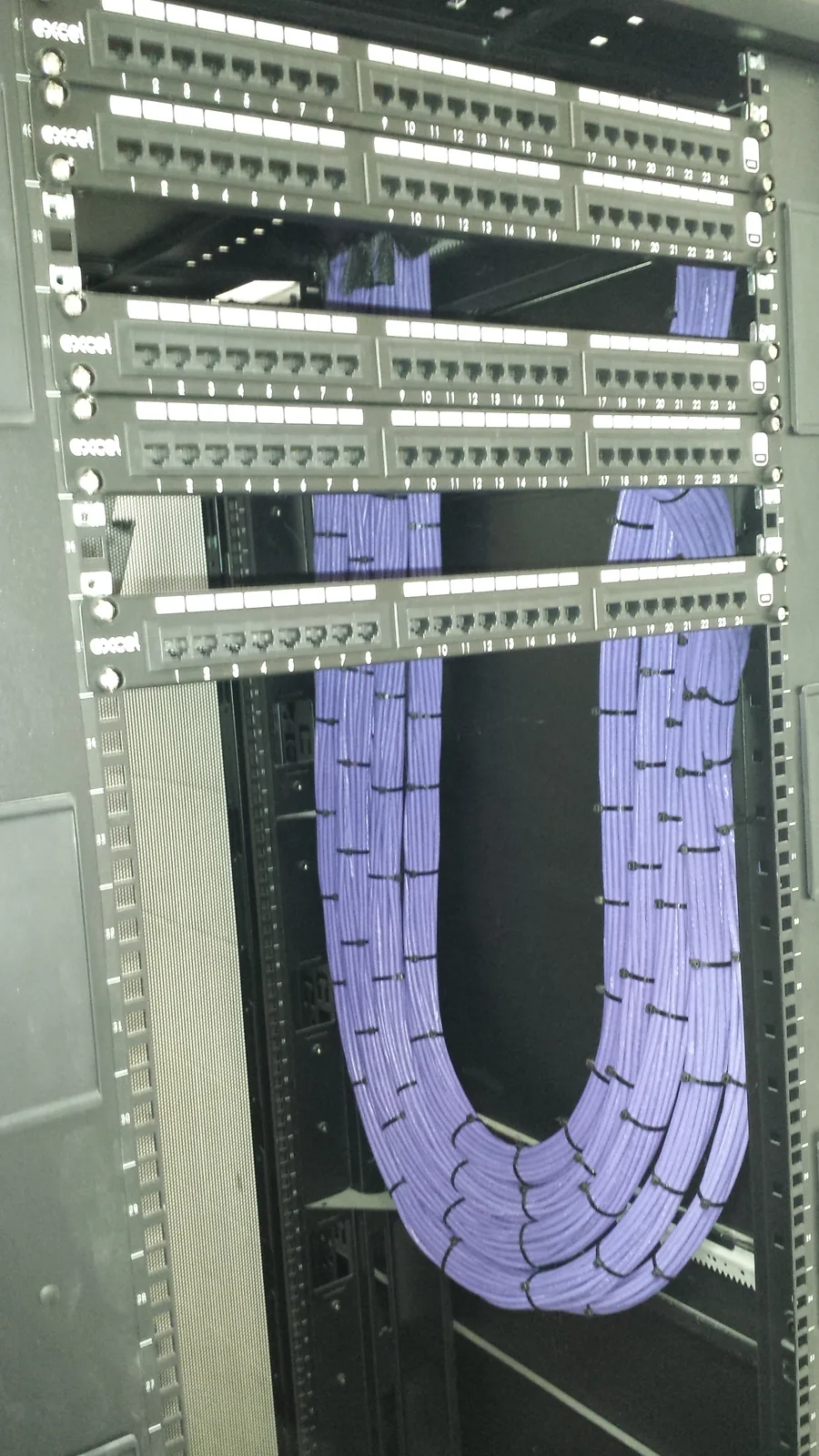
LGN project photography


Questions clients ask
It depends on performance requirements, pathway conditions, device needs, budget and the expected life of the building. LGN can assess the design rather than defaulting to one category.
The agreed pack can include labels and numbering, test results, photographs, marked-up plans and design records made available through LGN Cloudshare.
Yes, subject to survey and programme. Access windows, noise, dust, permits, isolations and business continuity should be agreed before work starts.
Existing links can be inspected and tested. Reuse should follow evidence about condition, performance, labelling and suitability rather than appearance alone.
Eligible Excel systems may receive a 25-year manufacturer product warranty when design, components, installation and certification meet the scheme terms. Eligibility is confirmed for each project.
LGN is Northwest based and undertakes projects across the UK, with occasional overseas assignments where the scope and programme support travel and subsistence.